Specification
Specification 42 — Transparency log (RFC 6962 Merkle tree)
Prove every issued artifact was publicly logged.
status: accepted · implementation: shipped
Purpose
Prove every issued artifact was publicly logged. Catches compelled issuance, rogue issuance, retroactive forgery.
Architecture
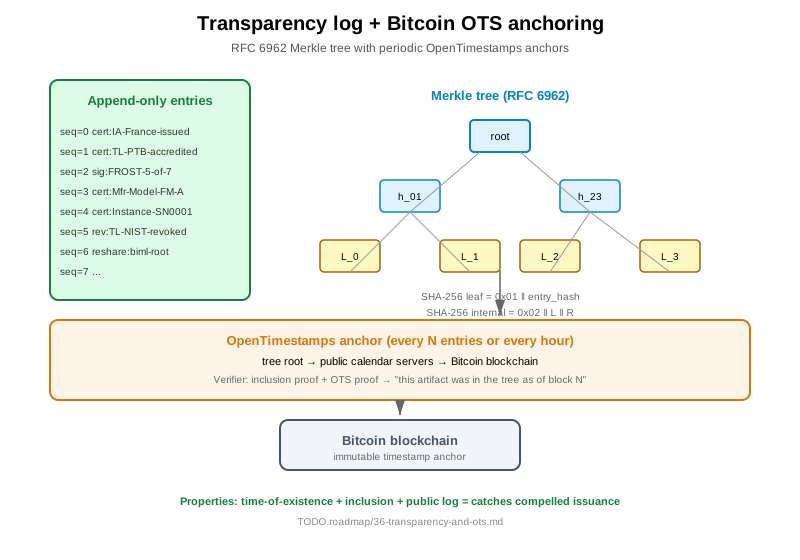
Simpler than CT-style gossip. No academic witness network required. Append-only Merkle tree with Bitcoin-anchored roots.
Merkle tree (RFC 6962)
Leaf hash: SHA-256(0x01 ‖ entry_hash)
Internal hash: SHA-256(0x02 ‖ left_hash ‖ right_hash)
The 0x01/0x02 domain separation prevents second-preimage attacks.
Inclusion proofs
An inclusion proof for leaf at sequence N is a list of (sibling_hash, side)
pairs from leaf level up to root:
proof = [
  (sibling_0, Right),  # at leaf level, sibling is to the right
  (sibling_1, Left),   # at level 1, sibling is to the left
  ...
]
Verifier reconstructs the root by combining leaf + siblings in the correct order:
current = leaf_hash
for (sibling, side) in proof:
  if side == Left:
    current = SHA-256(0x02 ‖ sibling ‖ current)
  else:
    current = SHA-256(0x02 ‖ current ‖ sibling)
verify current == root
OTS anchoring
Every N entries (or every hour), the tree root is committed to Bitcoin via OpenTimestamps. The proof is:
- Time: OTS proves root existed at Bitcoin block N
- Inclusion: Merkle branch proves artifact in tree at root
- Public log: tree published; missing artifacts detectable
A malicious CA cannot silently issue a fraudulent cert because:
- If they DON’T log it, verifier can’t validate (cert not in tree)
- If they DO log it, public sees the issuance
- If they try to rewrite history, Bitcoin anchor catches it
Implementation source
- Crate:
confium-transparency(merkle submodule) - Test vectors:
crates/confium-transparency/tests/integration.rs